Erik Funk: One of the most important things about us is we started before the punk explosion: when Green Day and all that stuff went mainstream. Obviously we’re around still today. Even at times when it seemed we were maybe at our biggest, or times we could be even bigger, we never seriously entertained doing the band for a living. We never had the conversation.
Scene Point Blank: Did you get the major label phone calls?
Erik Funk: We got calls from subsidiaries this-and-that but nothing super serious.
The point is we started at a time when that shit had never happened to any punk bands. You started out knowing that’s not part of your plan. A few years later, punk bands started with the idea that “We could be on MTV and be huge.” We started before that so we never ever…When we had choices that could make us bigger in the music business -- most of the time we didn’t do it, but not because we were trying to be extra underground -- We had this, “If it doesn’t sound fun let’s not do it” [philosophy]. That’s why sometimes it’s 6 or 8 years between records because it doesn’t sound fun to make a record.
Billy Morrisette: We always tried that theory going on tour with bands. If you wouldn’t pay to see the show, why play it?
It doesn’t matter if it was a bigger band or a larger audience. If it was something we thought was lame.
Erik Funk: We would get asked to do early Warped Tours and we would always say no because we wouldn’t have paid to go see those Warped Tours. We weren’t going to them, why would we play it?
Billy Morrisette: I don’t think less of any of my friends who have done them. It’s not a political statement at all, it’s merely a choice.
Erik Funk: I think that’s why we’ve confounded band peers and labels. Because why wouldn’t you do that? I know there are choices we made that, had we made them differently, we would be in a different place. Who knows what place. Possibly a much bigger place.
Lane: We would be in a backstage twice the size of this room.
There would be buffalo wings over there.
Erik Funk: But by doing things that way we’ve ended up in situations where we have played in front of 15,000 people in Japan opening for Green Day. We’ve done crazy stuff that rock bands set out to do. But it’s always happened our own way.
Billy Morrisette: Done!
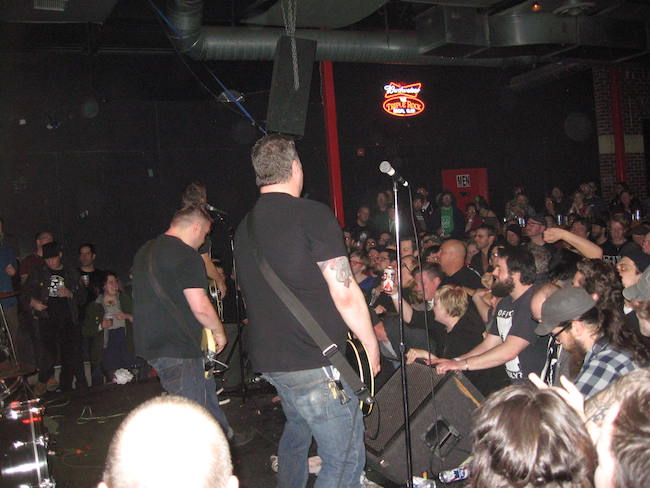
Scene Point Blank: We’re not even to Situationalist Comedy.
The first time I saw you was with Avail and Citizen Fish in some warehouse.
Billy Morrisette: That was a show that got moved.
Scene Point Blank: That was before the internet, so I drove three hours with friends. We went to Extreme Noise and somebody drew us a map.
Erik Funk: There was a ton of people at that show. Avail was the biggest thing in the world back then for underground punk bands. They were huge for a lot of years.
Billy Morrisette: And they were a great band.
Erik Funk: Paddy and I, in our old band, played a couple shows in Florida in ’91 and Avail was on the bills with us. It was the second and third shows Tim sang with them. No one was there to see them, or us for that matter.
Billy Morrisette: Tim used to drum.
Erik Funk: Tim originally played drums for Avail. We’re like, “This band is crazy and weird and amazing.” Actually, I think it’s possible that Tim is one of those people I’ve known the longest of people I still know and see in a band way. It’s possible that Avail are the people that I know the longest.
They weren’t ever touring yet. They hadn’t made that self-released record yet.
Scene Point Blank: When you said “done” the room cleared out. I figured I’d have to pry for stories on the last 12 years…
Erik Funk: We do all this other stuff. It’s not that we don’t want to do more D4 stuff. Sometimes we can’t, sometimes we don’t want to…Possibly the coolest thing about us is maybe that we still have fun doing it, because we only do it in ways that are fun so we’ve never put ourselves through miserable shit. We just don’t get ourselves in those situations. Every once in a while things go wrong, but a lot of bands put themselves in situations that suck and break up.
We have a great relationship with our band and it’s there when we want it.
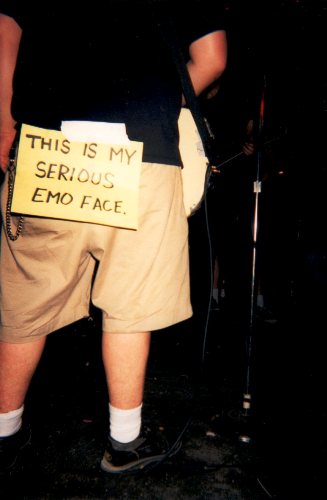
Scene Point Blank: Is it a lot harder to do a day-after-day tour now?
Erik Funk: When we have gone on a string of shows it’s definitely more taxing. It’s hard to schedule.
Billy Morrisette: The days of us doing 8 weeks are simply gone. But now we can do a week on each coast and a few days around the central or southern states or whatever. Just do chunks and it’s fine for us.
Erik Funk: Because of all those years of doing stuff, now we can fly into a place and just play and fly home. If we couldn’t do that, we wouldn’t do anything but play in town because sometimes that’s the only way to make something happen.
We’re lucky. No one has left. There’s no and-then-this-guy-joined.
Scene Point Blank: Actually, did you mention what happened with Sloan?
Erik Funk: The very first tour, I remember it nothing-but-fondly, but those were hard tours: a lot of shows, no money, long drives, that stuff. All bands are great until they get into a van, week after week, for a tour like that. It turned out that 3 out of 4 personalities meshed really well and one of them didn’t really. He just couldn’t make it work with us and clearly Billy could.
Billy Morrisette: He went on to play in Man Afraid.
Erik Funk: He still did stuff with Amp 176 and we’re cool with him, it wasn’t too much drama.
It’s more amazing to me that nobody moved or whatever.
Billy Morrisette: I’m still the new guy from ’95.
Erik Funk: It’s gratifying to still be able to play stuff, even just in our town, but to go elsewhere and people care. It’s gratifying…that there are wingnuts who get D4 tattoos and say it’s meant a lot to them. All that stuff is a byproduct, not a goal, but it’s nice to be one of the bands that has that a byproduct…
Scene Point Blank: Being a band this long, does it get harder to play some of the songs, either because you’re in a different place or you’re just sick of it?
Erik Funk: Especially once it’s been a year or two since a record -- which is a lot of years -- I think all of us feel a little guilty mixing around the same set. That is one downside to not being very active. We would always think it would be more fun to have new stuff to play but even when we were more productive we were never the band to play 6 new songs that aren’t released yet. Even when we had them, we never did that.
A lot of that is honestly because we write a lot in the studio. We don’t write a lot, we finish in the studio. For the last 10 years we don’t rehearse and work out pieces until we’re in the studio.
Scene Point Blank: Was it weird when it changed from playing to people you knew to people you didn’t? Did it put pressure on you?
Erik Funk: That happened so early it’s hard to remember. Like every band, we had a P.O. box and we were the worst at returning [mail]. It’s all email now, but back then that thing would be stuffed full of letters and some of them were hilarious. Me and Paddy would sit down: everyone take a stack and write back. We were so bad at that. That was a long time ago and that was already people writing us from wherever in the world.
Paddy Costello: Pre cell phone, pre email.
Erik Funk: Touring without cell phones, we did a lot of that. There’s a small amount of bands who are still active with the same members who also did that. Laughs.
Pre-marriages. All those lifestyle things.
Erik Funk: None of us had kids really early. Lane had them first and I think his oldest is 6 now…Things might have been very different if any of us had a baby when we were 25 but the way things worked out none of us did.
I say we take a break.
Editor’s note: And here we are, in 2019…Stay tuned for a potential Part 2.
D4 is playing a series of anniversary dates across the Upper Midwest this fall, including an upcoming Dec. 14 show at First Avenue in Minneapolis.