You’ve heard of no depression music? I’m coining a new term here: depression punk.
Opening song “Loud and Ugly” might be a good description of vocalist Jesse Thorson’s approach in general. His songwriting has always been outspoken and focused on personal flaws, pointing to the uglier elements in life. I always referred to the Pretty Boy Thorson bands as essentially country songs set to punk music. He moved away from that approach somewhat with The Slow Death, but it’s back here. I mean, he named a song “Grown Man’s Tears.” Yes, there’s really a punk song about crying on this record -- take that up-the-punx.
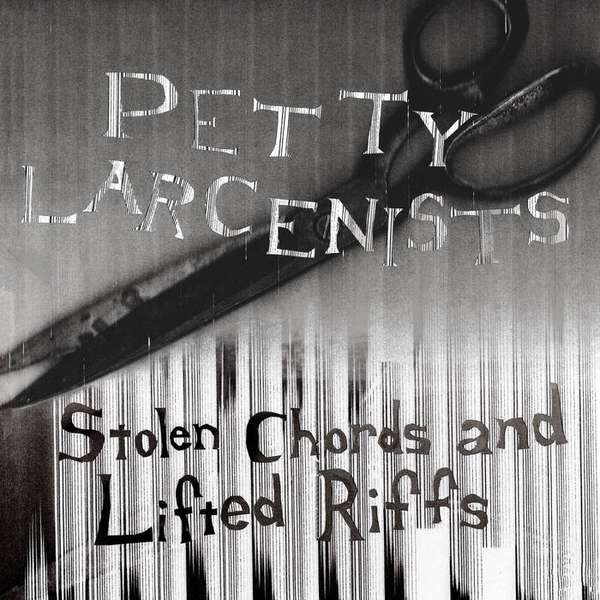
So what’s going on with Petty Larcenists? It takes that Pretty Boy Thorson downtrodden tone and it incorporates the more straight-forward punk of The Slow Death, but it feels more unified than The Slow Death, which kind of had an all-star band thing going on where each song could sound quite a bit different from the last. Here, it’s back to those Pretty Boy Thorson roots but with a little more volume. It’s, as I said in my opening, embracing that loud and ugly theme. Melody drives it while the personal-yet-relatable emotional tone is its heart. It’s singalong punk, sure, but not the fist-in-the-air variety.
So while I’ve sandwiched it neatly into Thorson’s discography, what sets it apart? There’s a nice variety on this record, yet the band is honed in on a style: it’s DIY, it’s personal, and it’s equal parts catharsis and pain. The opener is an amped-up country song that emphasizes the rhythm section and bass drum to give a hollow, self-deprecation vibe. Then the energy turns on the follow-up “What Now.” To generalize the whole record, there are equal shades of depressed classic country and shout-out-loud angry punk. To balance things out with a little flair, I also pick up shades of glam rock’s riffage and melodies that cut through the dense emotions and give a glimmer of hope and levity amid the more overwhelming emotions.
After starting with a just-got-dumped song, the record ends with a full progression to the better-off-without-you rager “I Can’t Get High,” something of a moving-on song that alternately proclaims love to the one and only rock ‘n’ roll.
I keep bringing up Thorson’s discography and that’s because it’s relevant here (or at least it seems that way to me). This might be a first record from Petty Larcenists, but it’s polished songwriting with a potent, defined sound. This record isn’t an introduction to something. It’s a fully formed statement.