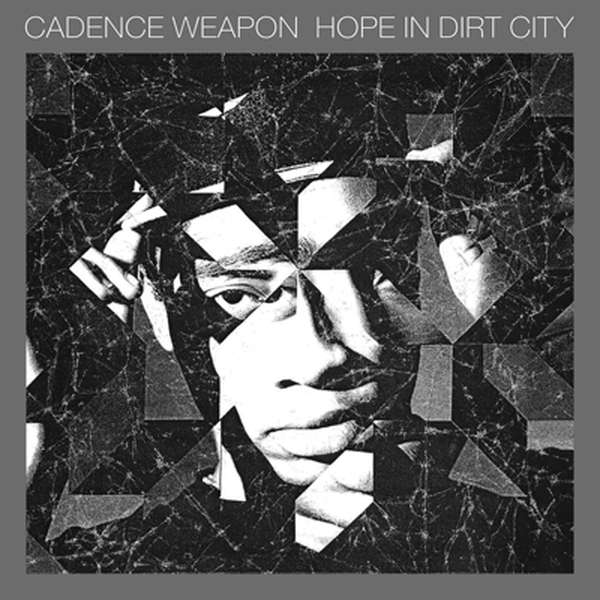
Hope in Dirt City is the third release from Edmonton, Alberta’s Cadence Weapon. With a smooth flow and an ear for wordplay, Cadence Weapon creates a kind of thumping hip-hop, with big beats that are crafted using sounds that are not traditionally percussive. All that, of course, with a bit of 20-something ironic hipster to it and a focus on textual layering that also includes sounds from electronica, indie rock, jazz, and numerous other styles. This time around, the sound is more varied and organic than on its 2008 predecessor, Afterparty Babies.
His last record played heavily on electronic beats. The epitome track on this record to reflect a similar usage comes in the form of the aptly titled “Crash Course for the Ravers,” with a driving beat that gives shivers of mid ‘90s European clubs while Cadence lays smooth rhymes over the top, telling a story of boy-girl courtship—at least until the horn insertion midway through. Needless to say, there is a lot going on musically in these songs. Tracks like the opener “Get on Down” and “(You Can’t Stop) The Machine” have an old-school throwback sound, using simpler rhyme patterns and more minimal beats, while other songs explore a whole new terrain. “Jukebox” and “Small Deaths” bring horns into the mix and a light, jazzy air that takes the songs in unexpected directions. In “Small Deaths,” the jazzy percussion comes in midway, somehow effectively transitioning from a reggae beat that starts the track and, earlier, gives something of a The Streets vibe. While there’s not much to sonically compare with Mike Skinner’s project, there is something akin in the way the artists layer a narrative atop rhythmic structures. Another comparable may be his impressive vocabulary.
While the record shows a wider influence and direction than Afterparty Babies, many of the songs fall flat. “No More Names (Aditi)” puts me to sleep each time I hear it, and I can’t help but wonder what in Cadence Weapon’s past makes him hate hypemen so strongly. With “Hype Man” and “There We Go,” he is at his most mocking, and the songs, at times, feel almost like a parody of the genre rather than reflective of it.
Afterparty Babies hit me strongly at first, only to lose power over time. With Hope in Dirt City, he shows the ability to overcome some of the traits that made the last record weaken, but it remains inconsistent from song to song. “Conditioning” and “Crash Course for Ravers” are my favorites out of the eleven cuts and the jazzy bits add a unique and cohesive feel, but the record remains inconsistent and best listened to in just a few tracks at a time.
Related news